
Osteopathic Treatment for Chronic Lower Back Pain in Bath
Anatomical Mechanisms of Lumbar Spine Injury
Living with chronic lower back pain can be exhausting. It typically originates from a mechanical dysfunction within the lumbar spine, specifically affecting the intervertebral discs, facet joints, and surrounding lumbopelvic muscles. Prolonged mechanical stress alters the natural biomechanics of your lower back, resulting in localised inflammation, defensive muscle spasms, and restricted movement.
At The London Road Clinic, we understand how debilitating this can be. We are here to help address these mechanical deficits through direct physical intervention, careful structural diagnosis, and targeted rehabilitation.
Intervertebral Disc Compression and Herniation
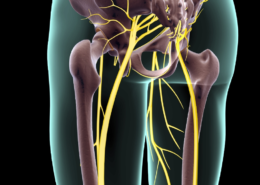
The intervertebral discs act as natural shock absorbers between your lumbar vertebrae. Sustained spinal flexion (bending forwards) increases hydrostatic pressure on the disc’s inner core. Over time, this pressure can cause the outer fibrous ring to bulge or herniate. If the disc material compresses the adjacent nerve roots, it generates radicular pain—commonly known as sciatica—which often radiates down the back of the thigh and leg.
Facet Joint Irritation from Sedentary Postures
The zygapophysial joints (facet joints) guide the movement of your lumbar spine. Prolonged sitting and poor ergonomic positioning place continuous loads on the posterior aspects of these joints. This static loading compresses the synovial capsules, leading to local inflammation, cartilage wear, and a sharp, localised pain when you try to bend backwards (spinal extension).
Environmental Triggers for Lumbar Pain in Bath
Environmental, occupational, and lifestyle factors directly influence the load on your lower back. The unique geography and infrastructure of Bath can actually present specific biomechanical challenges.
Biomechanical Stress from Commuting via the A4 London Road
Daily vehicular commuting along the A4 London Road corridor subjects the spine to continuous low-frequency vibration and sustained flexion. Stop-and-start traffic requires repetitive pedal engagement, which can cause asymmetrical loading on the pelvis and place chronic micro-stress on your lower lumbar segments.
Lumbar Strain Risks from Hill Walking around Solsbury Hill
Navigating Bath’s beautiful but uneven topography forces your musculoskeletal system to adapt to steep gradients. Ascending routes towards Solsbury Hill or Lansdown places the lumbar facet joints into prolonged extension while demanding high force output from your back muscles. Conversely, steep descents require eccentric muscle contractions, increasing the risk of acute muscle strains in the lower back and gluteal muscle groups.
Clinical Osteopathic Treatment Methods
Your initial clinical assessment at The London Road Clinic involves orthopaedic testing, neurological screening (checking reflexes and nerve function), and a functional gait analysis to isolate exactly what is causing your pain. Based on this structural diagnosis, our principal osteopath, Alex Earle, or a member of our clinical team will apply targeted osteopathic techniques.
Spinal Articulation for Restoring Lumbar Mobility
Spinal articulation involves gentle, rhythmic, and passive movement applied to the restricted lumbar vertebrae. This specific oscillation increases synovial fluid production within the facet joints, stimulates local mechanoreceptors to help block pain signals, and restores normal movement without forceful manipulation.
High-Velocity Low-Amplitude (HVLA) Thrust Techniques
When appropriate, and only with your comfort and consent, HVLA techniques are utilised to address severe joint restrictions. A localised, rapid mechanical impulse is applied to the restricted facet joint. This often produces a cavitation (a popping sound) which instantly improves your range of motion, breaks down joint adhesions, and rapidly decreases localised pain receptor activity.
Soft Tissue Manipulation for Muscle Spasm Reduction
Chronic joint restriction is almost always accompanied by muscular hypertonicity (muscle spasms). We apply direct ischaemic compression and myofascial release techniques to the quadratus lumborum, piriformis, and paraspinal muscles. This encourages the muscle tissue to relax, significantly reducing the compressive load on your lumbar spine.
Recovery Timelines and Prognosis
Your recovery prognosis depends entirely on the underlying tissue pathology and how long you have been experiencing the injury. We will always be transparent with you about how long recovery might take.
Acute Phase Tissue Healing (0-4 Weeks)
For acute muscular strains and minor facet joint sprains, our primary clinical objective is to reduce inflammation and restore your baseline mobility. Your body repairs damaged muscle fibres during this 2-to-4-week rehabilitation window. Treatment frequency is usually highest during this early phase to prevent restricted scar tissue from forming.
Long-Term Rehabilitation and Return to Activity
Patients presenting with chronic intervertebral disc pathology require progressive, long-term load tolerance plans. Following initial pain reduction, our treatment shifts towards core stabilisation and biomechanical correction. Our ultimate clinical objective is returning you to normal functional activities—whether that involves routine walking through Alice Park, playing golf, or resuming daily occupational demands in Bath city centre without structural pain.
Consultation Costs and Clinical Assessment Plans
Comprehensive resolution of chronic lower back pain begins with an accurate diagnosis. We keep our pricing clear and straightforward:
New Patient Osteopathy Consultation: £67
Returning Patient Osteopathy Treatment: £49
(We also offer dedicated Sports Massage and Acupuncture services as part of multi-disciplinary rehabilitation plans).